Collaborative 3D Piece based on the Laocoön with Mark Lumsden, University of Reading.
18th November, 2025
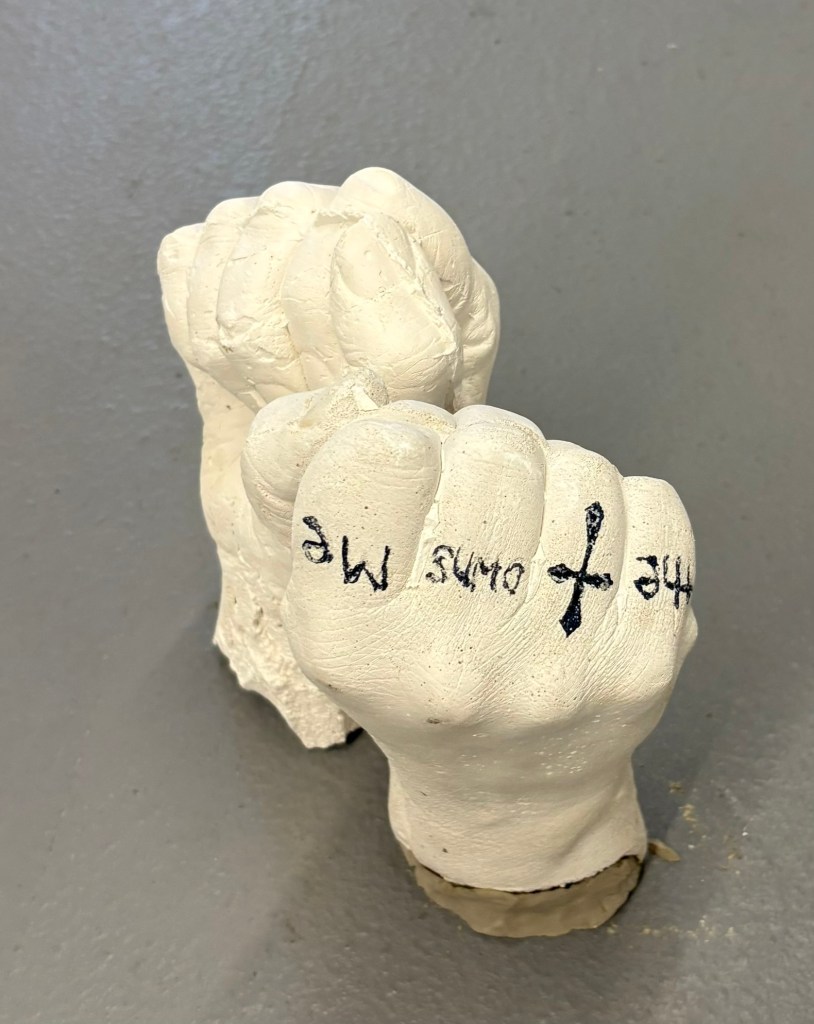
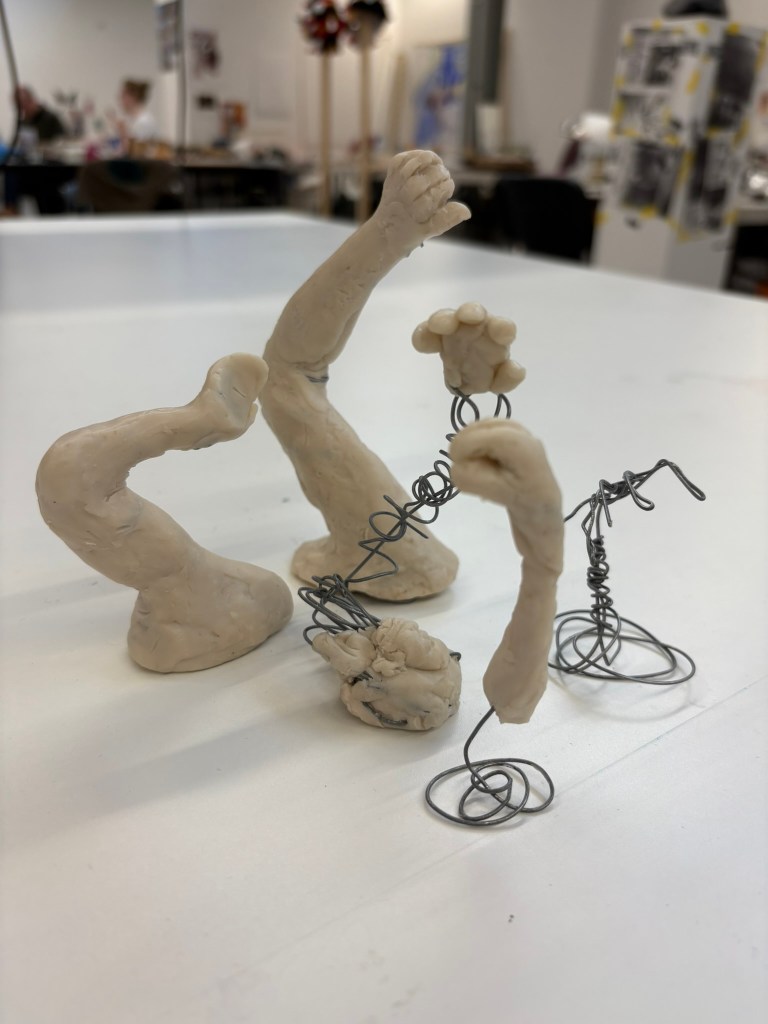
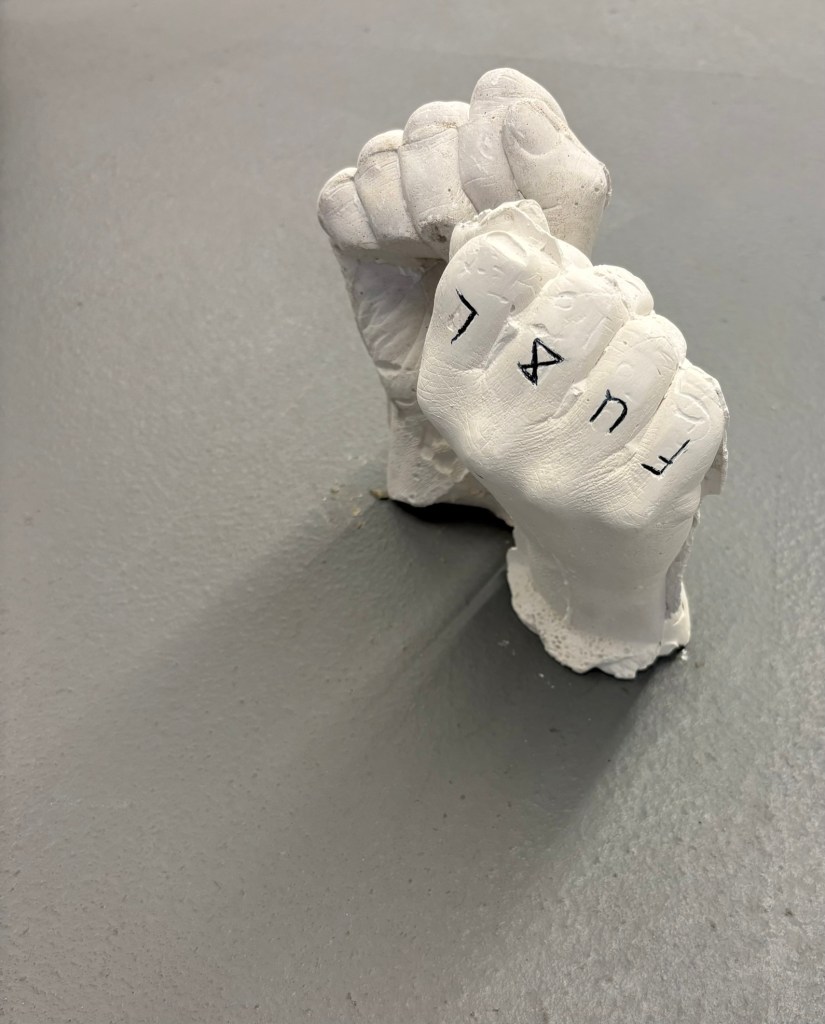
Up in Arms (2025),
Casts of my fists in gesmonite and plaster, tattooed in ink. 180*150mm; Initial maquettes for ‘Up in Arms’; Installation view from the other side.
Life size
Up in Arms is a collaboration with Mark Lumsden, a 3D sculpture cast in Gesmonite and Plaster from my right hand. Based on the Vatican’s most valuable sculpture the Laocoön and given an added layer by the protest of the Ultima Generazione (the Last Generation) group. The two fists represent protest: on the one hand is tattooed ‘Fuel’ with the hour glass symbol for climate protest (time is running out – this symbol was also the symbol used by Extinction Rebellion) in place of the ‘E’, and on the other ‘the Church owns Me’ with an ornate cross replacing ‘the Church’, in ink. This piece accentuates the protest of unheeded warnings of climate change and of the hypocrisy and long held burden of institutional Christianity.
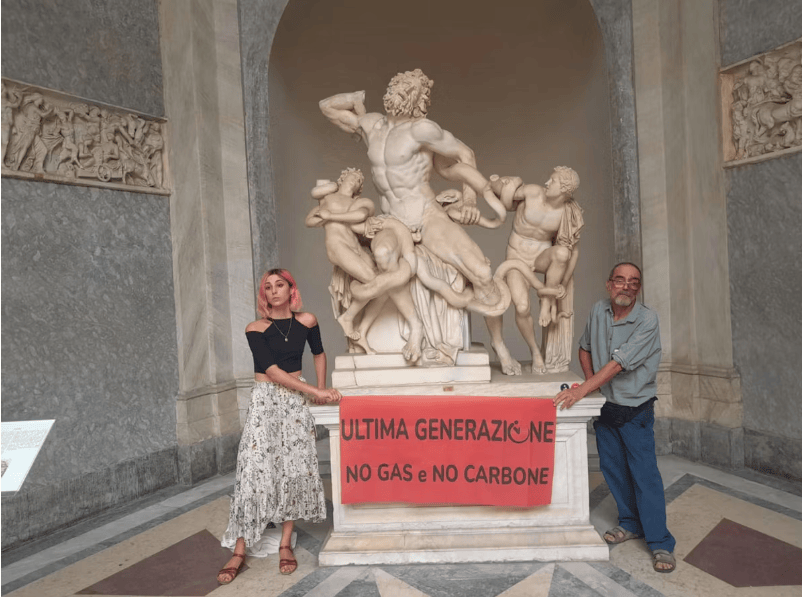
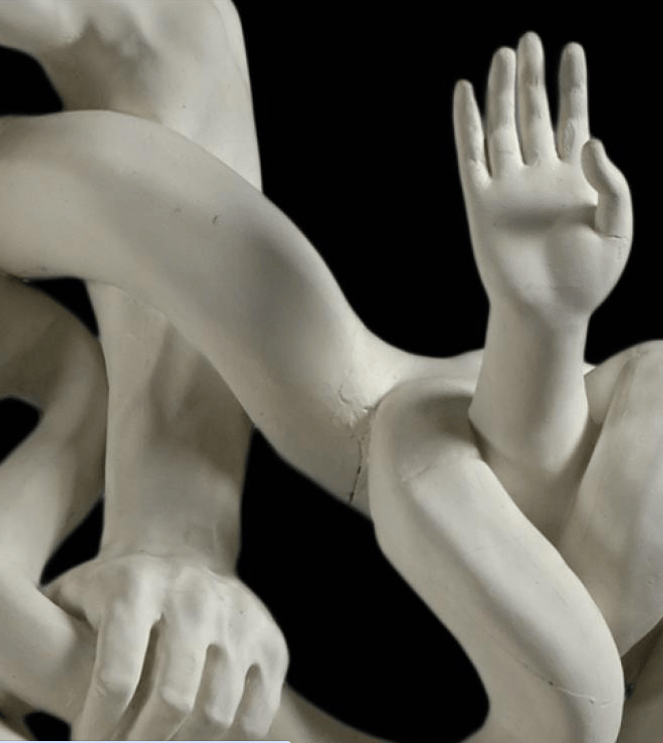
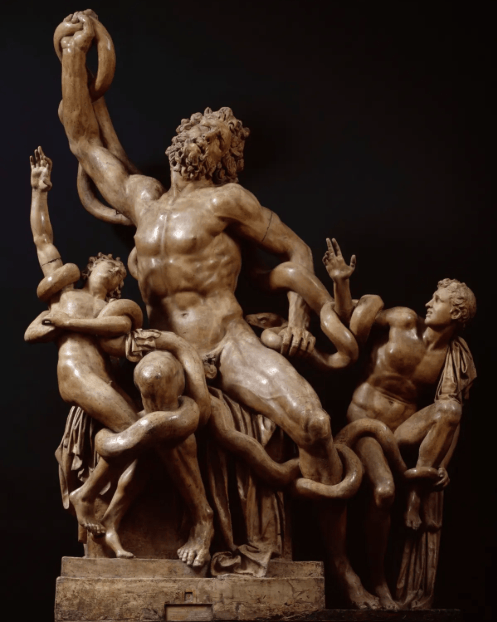
Protesters from ‘Ultima Generazione’ (The Last Generation) their arms glued to the plinth of Laocoön and Sons at the Vatican Museum; Close up of Laocoön ‘s arms from the Ashmolean Cast; Cast of the extended arm of Laocoön and Sons cast in the RA collection.
The Myth: In short: The priest Laocoön warned his people not to let the Trojan Horse into Troy. His warning “beware of Greeks bearing gifts” was not taken seriously, and the Gods were angry that he had tried to interfere. They sent giant sea serpents to kill him and his sons. This made the Trojans think that the horse had been sent by the Gods themselves and so they opened up the gates of the city.
Protest: Because of the association with these unheeded warnings, the sculpture highlights a parallel position of climate activists and so the group ‘Ultima Generazione’ (the last generation) decided to glue their hands to the plinth of the statue.
The Sculpture: This ancient sculpture was dug up in 1506, and there is some speculation about the sculptor, though generally it is attributed to Agesander or Polydorus of Rhodes: perhaps this was a ‘collaboration’. What is interesting about the sculpture is that (as with many ancient sculptures) the arms and hands were knocked off or not found or damaged, so a competition was held to decide what to replace them with. Raffaello judged the competition and favoured an outstretched arm submitted by the sculptor Sansovino. Michelangelo submitted a bent arm which, upon rejection, he buried. The ‘original’ arm was at some point found, and, then replaced the outstretched one by Sansovino – it was found to be the same as Michelangelo had imagined. Some say this was actually Michelangelo’s buried fragment, some say that the ‘original’ fragment was in fact by Michelangelo and that he had buried it, ready to be excavated.
My response: For me this sculpture is all about arms/hands, be it those of protesters or of the unheeded Laocoon trying to protect his sons, or the rival posturing arms of the two Renaissance sculptors. Protest is partly posturing.
Collaboration: Mark and I linked the piece to protest in different ways – for Mark it was about the Vatican and the church, whilst for me it was about the climate change protest itself. We both independently came to the idea of tattoos being marked onto the arms. But the fists marked this protest well, so we tattooed the fists and decided to bury them after the exhibition. Who knows when or if they will be dug up?!!
Press Play – A Collaborative, Experimental Multipart Exhibition, University of Reading
Autumn, 2025
Inspired by Yoko Ono’s Grapefruit (1964), this was a 4 week, quick and playful multicomponent exercise.
The first part was to simply compose and instruction and bring it in artistic form; the second, to respond to that instruction piece, the third to complete or respond to the second.
1.) Open Instruction Piece – A dystopian Fiction, Autumn 2025
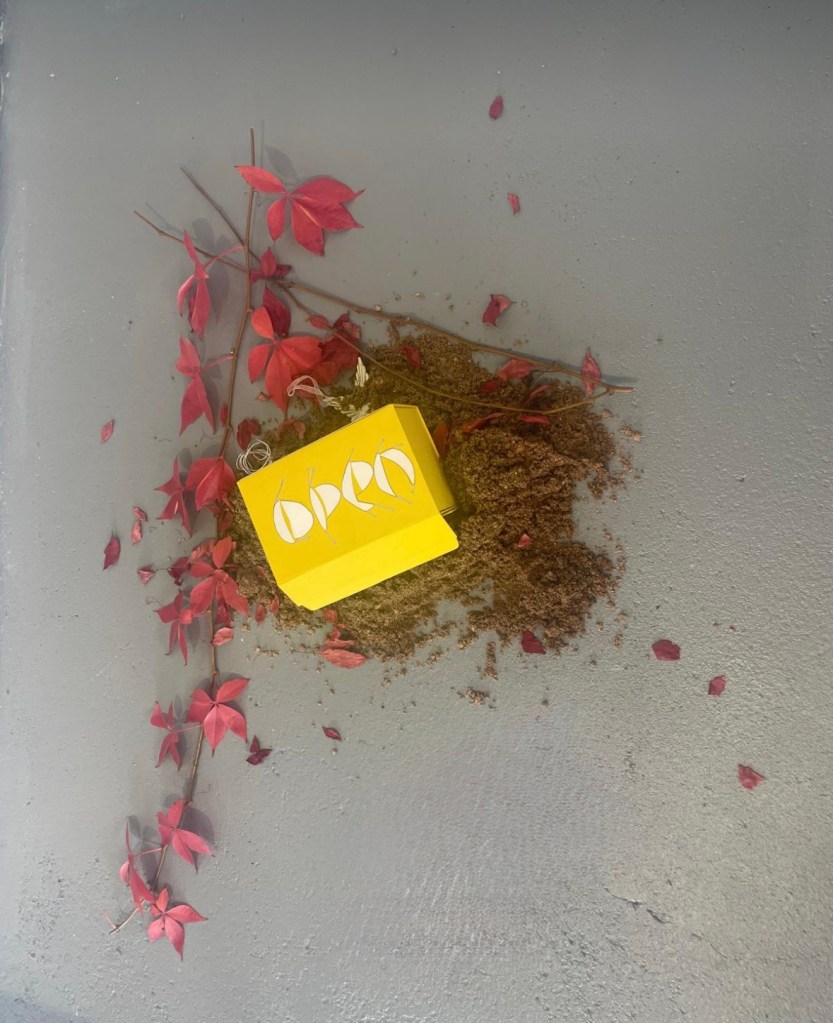
Open Instruction Piece – A dystopian fiction (2025),
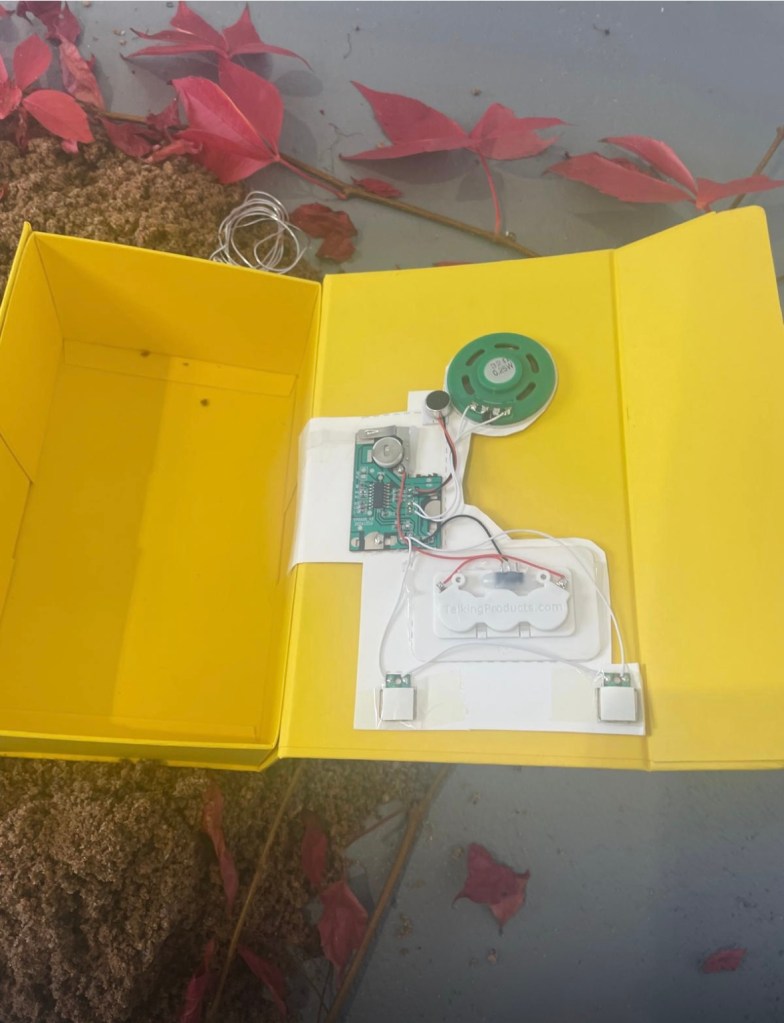
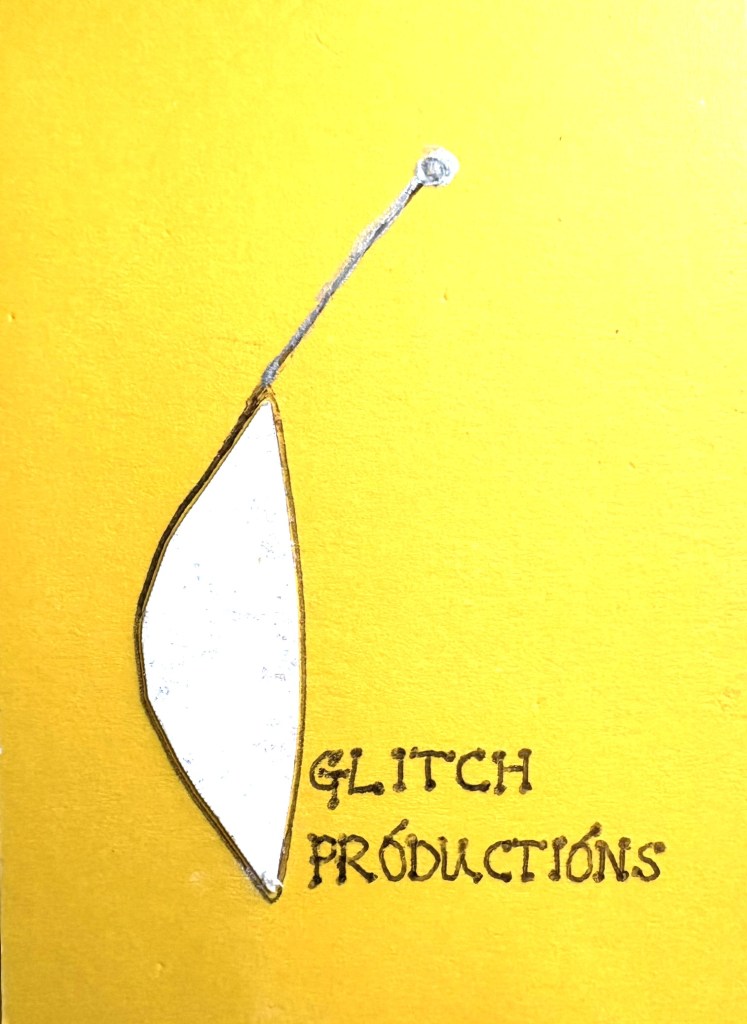
Yellow packaging box labelled with the instruction ‘open’ installed on a mound of horticultural sand with Virginia Creeper; sound card; glitch productions logo.
400*750mm
A yellow box nested on a pile of sand embraced by several strands of red Virginia Creeper indicate some apocalyptic event leaving us with remains, what is leftover. On the box is written ‘open’. The Instruction ‘open’ is ambivalent as it instructs you to open the box but nothing more, making its furtherance fairly open to interpretation. On opening the box, a sound card with its mechanical interior is exposed and plays ‘Compose at least one instruction, bring it in artistic form to the MA studios’.
It’s barely audible with interference and glitches. It is the only thing to be found in the box.
On the back a playful brand logo ‘Glitch Productions’ reveals an item of possible mass production calling the installation’s narrative into question.
2.) Bricolage, Autumn 2025
Bricolage (2025),
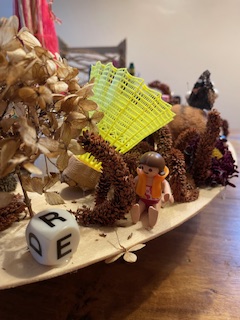
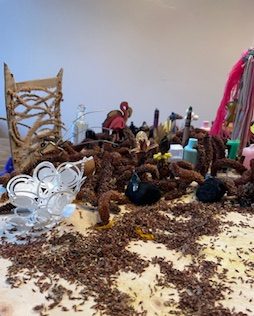
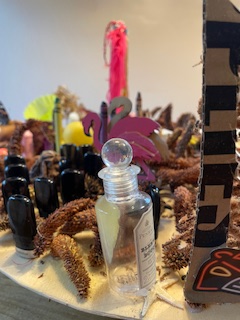
An assembly of inanimate objects lying around in my studio on thin plywood with catkins.
650*650mm.
A collection of knick knacks parks on a circular ply. Its residents are catkins in animated forms, discarded mini-bottles, children’s toys, a cemetery of vape refills, decaying fruit, a shuttlecock, dried hydrangea mops, leaves. The narrative is there to be eeked out: the peg-doll dressed for a carnival stands out above her people and a caped beadman stands at her feet. Hiding on the edge a playmobil boy wears a lifejacket – a route of possible escape?
3.) Caped Hatstand, Autumn 2025
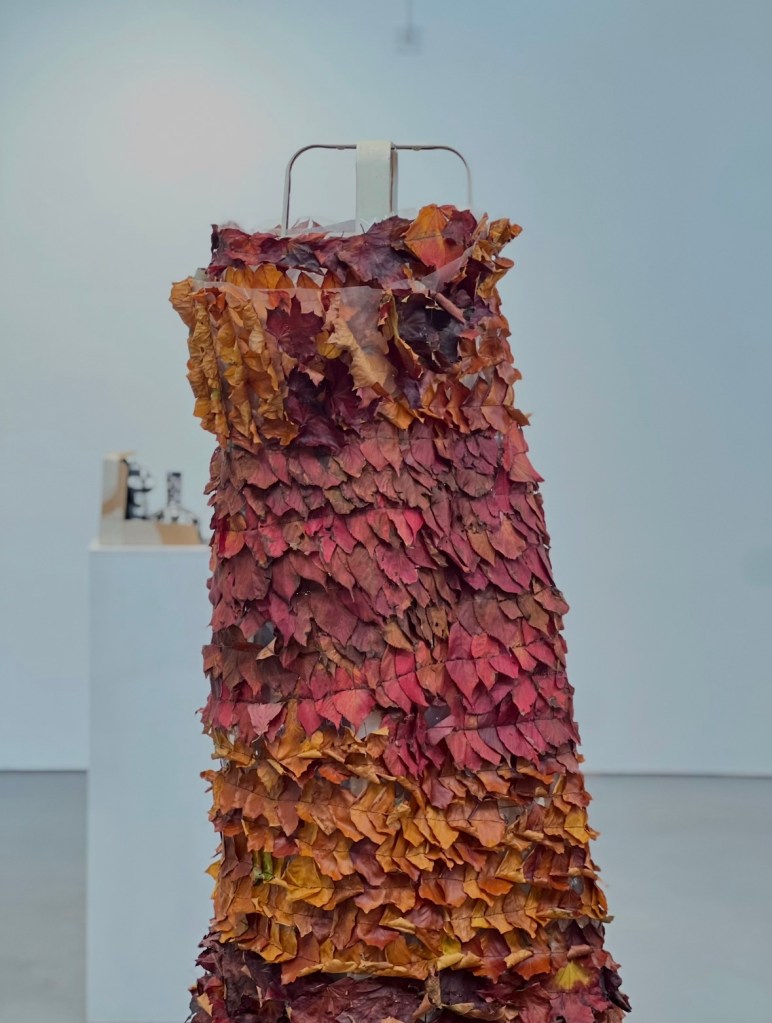
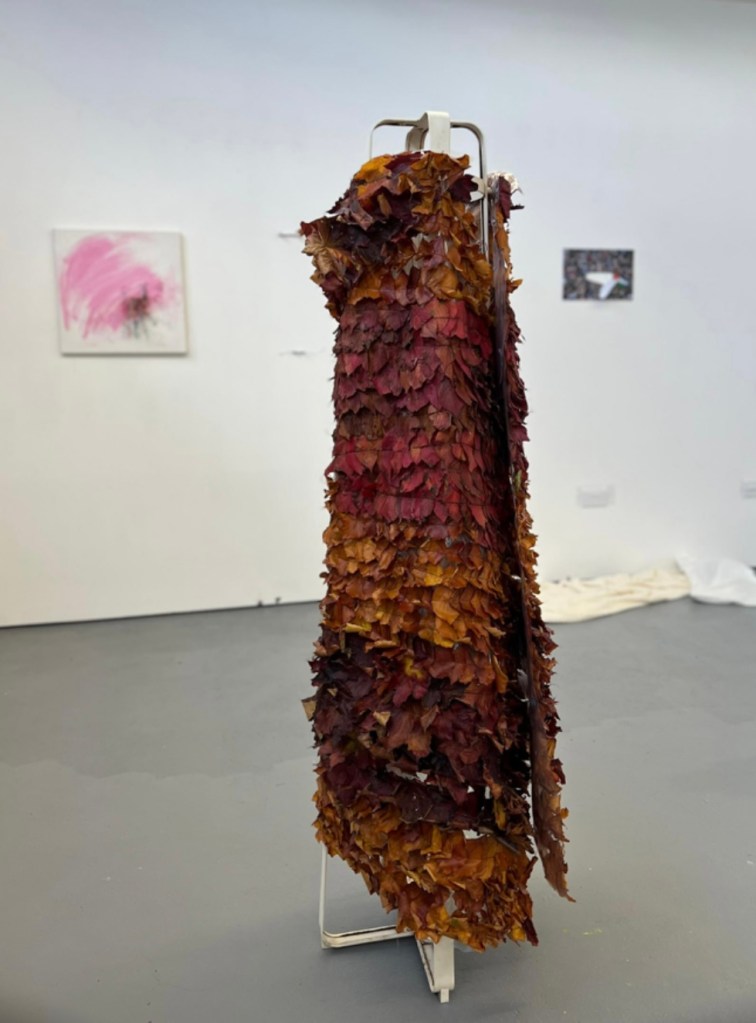
Caped Hatstand (2025),
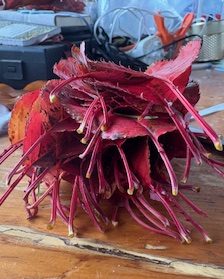
Rusty Ikea hatstand with a Cherry, Beech and Maple leaf cape with hood on plastic wrap.
1700*500*500mm
A slightly dishevelled and rusting Ikea hatstand is clothed in a hooded cape made of autumn leaves.
The piece calls attention to the draw of nature, its ephemerality and the agency of things. Why? Why is it draped around rather then hanging on the hook of a hat stand? And why is the hat stand in such a state? The length of the cape and hood gives the ‘clothing’ a somewhat Romantic style – pointing to the romanticization of nature. What is it? Who does the cape belong to? Would the cape disintegrate slowly over time?
 chantalferrer