Thresholds, RSA University of Reading, MA final Degree Show
September 10th – 13th, 2026
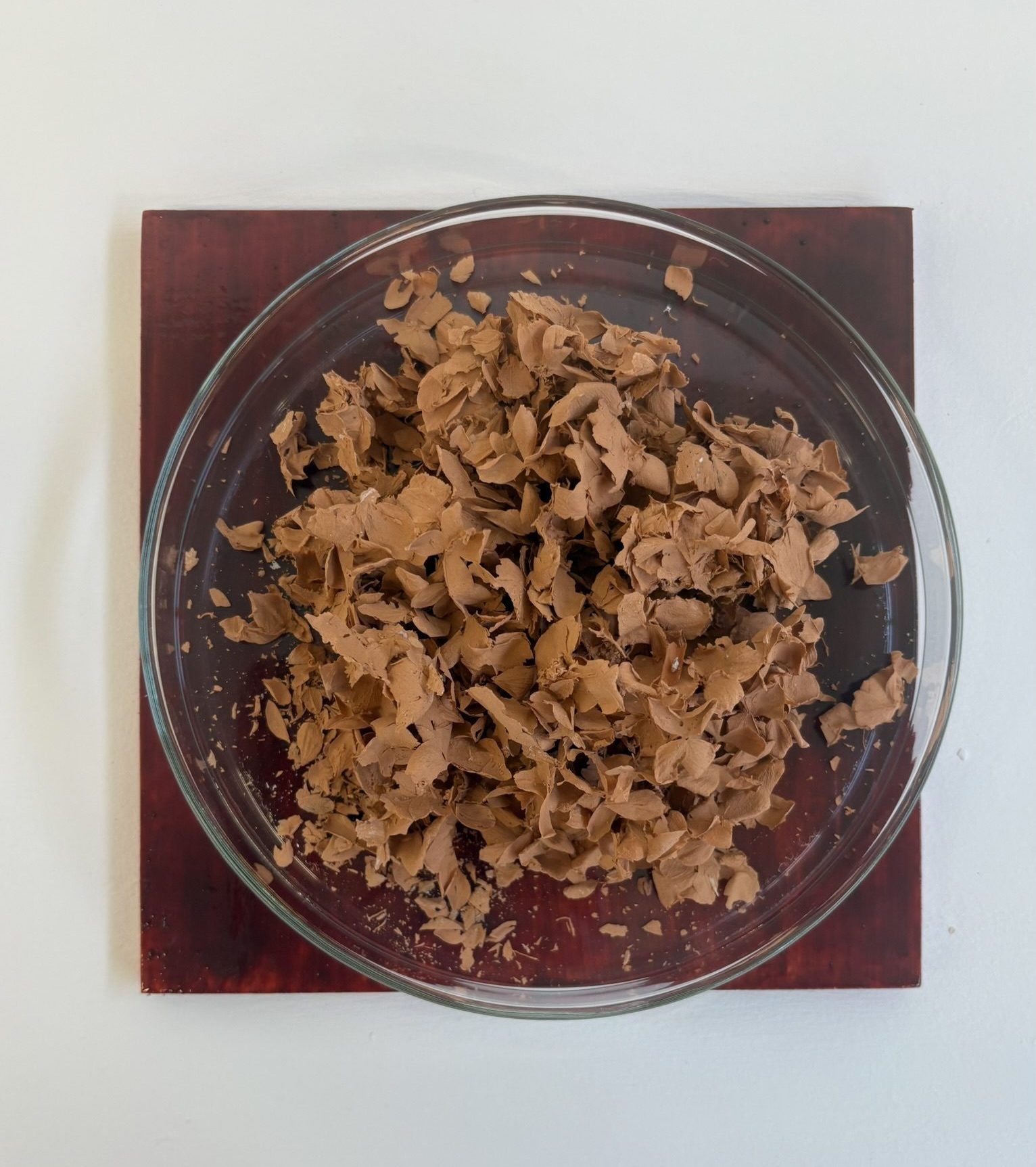
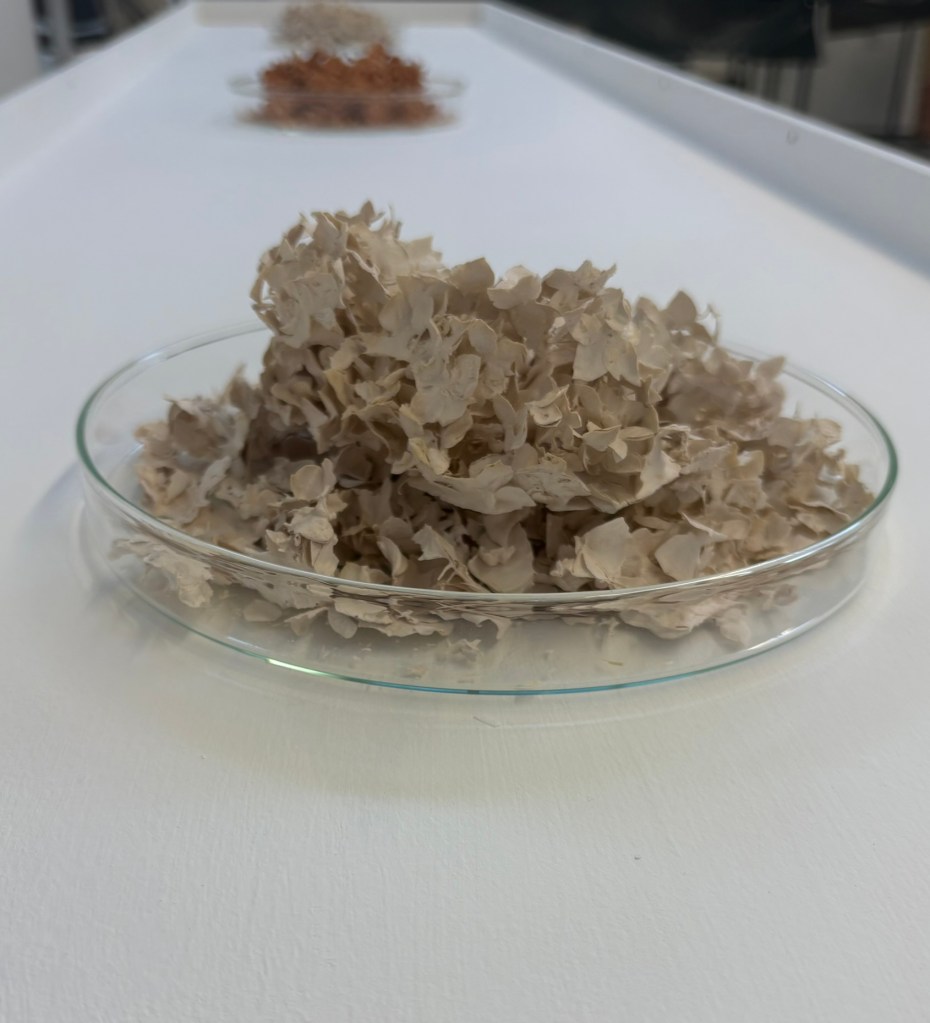
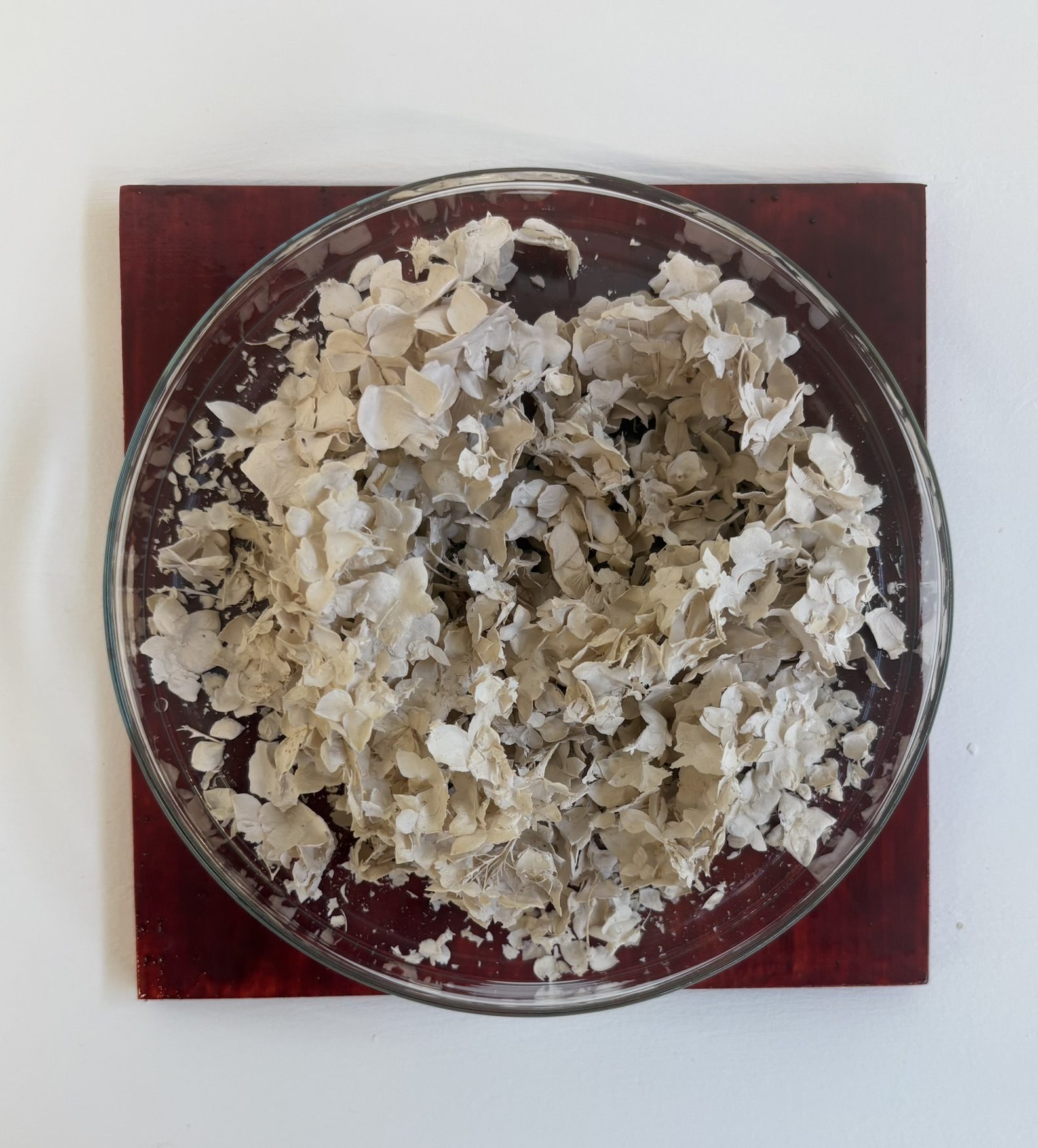
Petrified Hydrangea (2026),
Dried Hydrangea Panicolata (limelight), stoneware clayslip and wild clay slip, glass petridish.
200mm
Hydrangeas have long been associated with water primarily linguistically (hydor =water, angeion=vessel) and though they require moist soil and for a full head thrive with more water so it also refers to their ecological preference, they are actually fairly drought resistant.
In a project exploring climate change the effect of drought and the importance of water, I cast a dried hydrangea head in four thin layers of stoneware slip and fired them. I also cast some in wild clay. I wasn’t sure if it would survive the process of a 1180˚C firing as it was already so delicate. This is directly relatable to climate change, as the fragility of the flower in drought mirrors the material – the clay after firing is itself scorched earth. The Hydrangea is a very thirsty plant and is particularly vulnerable if in a container pot.
I first presented the piece on a piece of plywood which has been infused with plaster and clay and the whole assemblage resembled a grave stone. I planned to produce a whole cemetery. However, as they have been cast in stoneware clay they have (almost) literally been petrified. which means to turn to stone – it also alludes to a fear of what is to come. This allusion to the title worked well with the petridish and the scientific curiosity cabinet which was popular throughout the Baroque era.
 chantalferrer